Is Tankless Right for Your House?
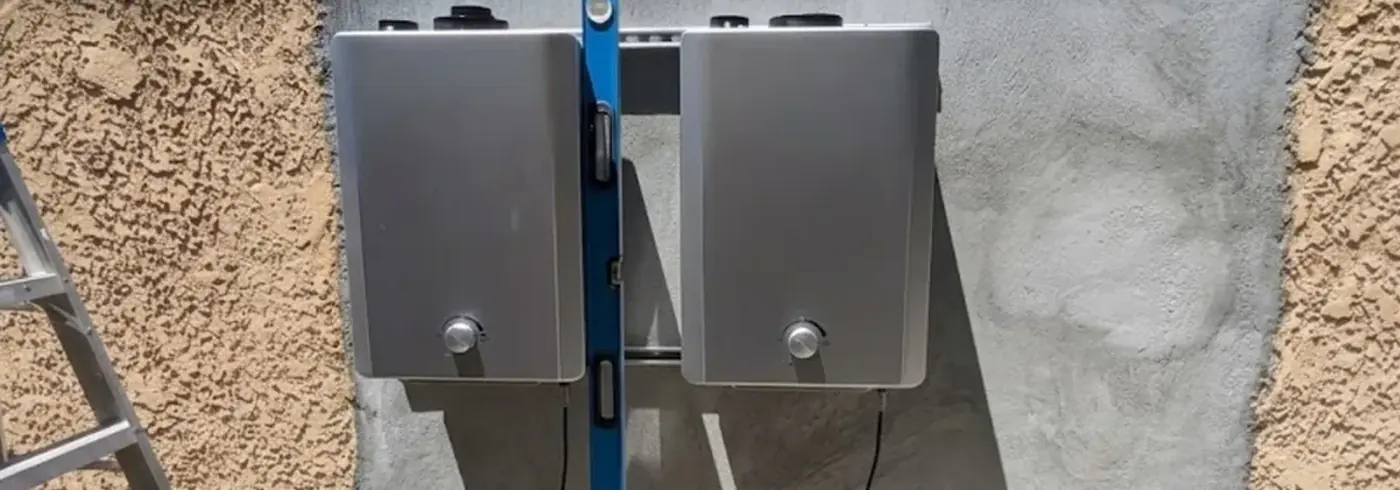
A tankless unit suits households that want continuous hot water and wall space back. It is less suited to a home where several showers, a dishwasher and a washing machine run at once and the unit is undersized.
The question is flow rate at the temperature rise your water needs. Winter groundwater is cold in Illinois, so the unit must raise the temperature more than it would in a warm climate.
Tank and Tankless Side by Side
Both are good choices when sized properly.
| Factor | Tank heater | Tankless heater |
|---|---|---|
| Upfront cost | Lower | Higher |
| Hot water supply | Limited by tank size | Continuous at its rated flow |
| Space | Floor space needed | Wall-mounted, smaller footprint |
| Gas and vent needs | Standard | Larger gas line and special vent often needed |
| Maintenance | Yearly flush and anode check | Descaling, especially with hard water |
| Typical failure | Tank corrosion | Scale in the heat exchanger |
The water heater installation page covers conventional tanks.
Thinking about going tankless?
Call dispatch to talk through sizing, gas and venting.
What Installation Involves
A tankless install is more than a swap.
Gas and electric check
Gas line size, meter capacity and an outlet for the unit are verified.
Venting
The unit needs a specific vent, and condensing models need a condensate drain.
Mounting and isolation valves
The unit is mounted and fitted with service valves for later flushing.
Commissioning
We test temperature rise, flow and error codes before leaving.
Hardness Makes Descaling Part of the Plan
Chicago reported hardness of 134 to 143 mg/L as calcium carbonate in its 2013 quarterly lab reports, and that water reaches Burbank through the South Stickney Sanitary District. It is a 2013 figure, so confirm the current value.
Scale inside a tankless heat exchanger cuts flow and triggers error codes. Flushing with service valves keeps the unit efficient, and many homeowners schedule a flush yearly.
Tankless Service We Perform
Existing tankless owners call for these jobs.
Flush and descale
A pump circulates a descaling solution through the heat exchanger, and the unit is flushed with clean water. It restores flow and clears scale-related error codes.
Error code repair
Ignition faults, flame sensor problems and flow sensor failures are diagnosed against the unit's code list.
Venting and condensate
Blocked vents and clogged condensate lines shut condensing units down. We clear and test them.
Recirculation setup
A recirculation pump shortens the wait for hot water at distant fixtures when installed with the right controls.
Permits and Code in Burbank
The City of Burbank requires a permit for plumbing alterations and all contractors must be licensed. The Building Department is at 6530 W 79th Street, and its number is 708-599-5500, option 2.
Gas piping, venting and the installation itself fall under local code, and we handle the permit steps with you.
What Determines Tankless Pricing
The price depends on the unit, the gas line and venting and the condition of the plumbing. Dispatch quotes after learning about your gas line and layout.
You see the price in writing before work starts.
Venting and Gas Standards for Tankless Units
Tankless gas units are installed against the manufacturer instructions and NFPA 54. Venting is the detail most often wrong, because condensing units use plastic vent pipe and non-condensing units need metal.
Gas line size matters too. A line that was sized for a tank heater may be too small for a unit with a higher burner input.
Tankless Water Heater FAQ
Many manufacturers recommend yearly flushing, and hard water makes it more important. Isolation valves make the flush fast.
Often yes. Tankless units draw more gas at once than a tank heater, so the line and meter capacity are checked first.
Common causes are scale, a blocked vent, a flame sensor fault or low flow. The code list for the model points to the cause.
It does not run out, but it can hit its flow limit. If too many fixtures run at once, the temperature drops.
Yes. It includes new gas sizing, a new vent and sometimes a new water line layout.
Tankless questions? Call dispatch.