
Water Is Going Somewhere: Act Before It Spreads
If you see water on a ceiling, wall or floor and cannot find the source, shut off the main water valve. The main is usually in the basement near the meter, and shutting it stops the flow while you wait for help.
A hidden leak behind a wall causes mold and rot over days, so treat a spreading stain as urgent and call the 24/7 line.
The Meter Test That Starts Most Leak Calls
Before any equipment comes out, a quick test tells you whether the leak is real and whether it is inside or outside the house.
Shut everything off
Turn off every faucet, appliance and ice maker so no water is being used.
Read the meter
Find the meter near the water heater or under a sink and note the dial or low-flow indicator.
Wait
Check again after twenty or thirty minutes. Any movement means water is leaking.
Call with the result
Tell dispatch whether the meter moved. It narrows the search before we arrive.
Think you have a hidden leak?
Call dispatch with the meter result and where you see water.
Where Hidden Leaks Show Up in Burbank Homes
Most leaks announce themselves through a symptom rather than a puddle. These are the signs we see most.
A high water bill with no change in use
Often a running toilet, a leaking valve or a buried supply line. The meter test tells you which side of the house it is on.
Stains on a ceiling or wall
A pinhole in a supply pipe or a failing drain joint. Thermal imaging and moisture meters trace it without opening the drywall.
Wet floor in a basement or crawlspace
It may be a pipe above the floor, a failed fitting or groundwater. Locating the source decides which trade fixes it.
Low pressure or the sound of running water
A leak on the supply line to the house can show up as a hiss near the meter or a drop in pressure.
How the Source Is Found Without Tearing Things Apart
Locating a leak is a diagnostic job before it is a repair job. The tools match the kind of leak.
Acoustic listening
Sensitive microphones pick up the sound of water escaping from a pressurized pipe. Along a floor or the street side of the house, the sound is loudest directly above the leak.
Thermal imaging
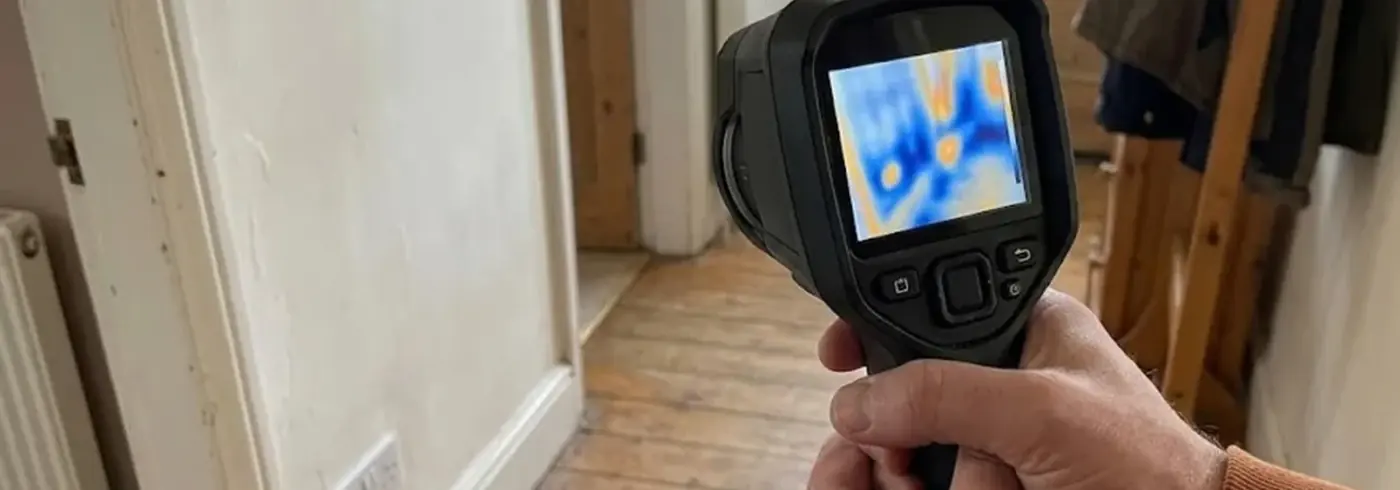
A thermal camera shows temperature differences in walls and floors. Hot water leaks and radiant lines often show as warm patches.
Moisture mapping
A moisture meter confirms how far water has traveled so that the repair opening is as small as possible.
Pressure testing
Isolating a section of pipe and watching the gauge confirms whether the leak is in the house or on the line to the street.
Slab and Underground Leaks in Burbank Homes
Many Burbank homes have basements rather than slab-on-grade floors, so a classic slab leak is less common here than in other parts of the country. A leak under a basement floor or in the line from the street still happens, and it is found with the same listening and pressure methods.
If a leak is on the water service line that runs from the street to the house, see the water service line repair page for the repair options.
Chicago Water Meters and Leak Alerts
Burbank water comes through the South Stickney Sanitary District, and the district's guidance says the meter is typically inside the house near the water heater or under the sink. The district also describes a ten-minute toilet dye test, noting toilets are the top cause of lost water.
Run that dye test first. A running toilet costs far less to fix than an excavation, and it is the most common answer behind a rising water bill.
Commercial and Multifamily Leaks
Rental buildings, small offices and shops have more pipe and more places to look. We survey the building by section, test risers and mains and report which area is leaking so the owner can decide on repair.
For larger commercial systems, see the commercial plumbing page.
What Leak Detection Costs Depend On
The price depends on how many areas need checking and what access is available. Dispatch quotes the visit by phone and confirms any repair price separately.
You approve the detection price first, and then the repair price once the leak is located.
Sources We Use for Hidden Leaks
According to the EPA WaterSense program, a water meter can reveal leaks, and the same method is the first test we run. A meter that moves with every fixture off is the clearest sign of a hidden loss.
Repairs that follow detection are covered by the Illinois Plumbing Code, the state standard found in 77 Ill. Adm. Code 890 and administered by the Illinois Department of Public Health, and a permit applies when a line is replaced.
Leaks in a Multi-Unit Building
A leak in a condo can reach the unit below, so it helps to find the source fast. Owners at Briartree and similar communities should also tell the association, because shared lines may be involved.
Leak Detection FAQ
Yes. The line is open 24/7, and dispatch schedules the next available visit for active leaks at any hour. Same-day appointments are offered when a crew is available.
Turn off all water use and check the meter. If it moves, water is leaking somewhere. A rising water bill, damp spots, mold smells and low pressure are other signs.
In most cases, yes. Acoustic tools, thermal imaging and moisture meters narrow the location so that any opening is small and targeted.
Yes. After detection you get a repair price. You decide whether to approve the repair or take the findings to another contractor.
Yes. The toilet dye test is a quick check. Add dye to the tank, wait ten minutes without flushing, and if color appears in the bowl the flapper or fill valve is leaking.
A running meter is worth a call. Describe what you see to dispatch.