
What a Sump System Actually Does
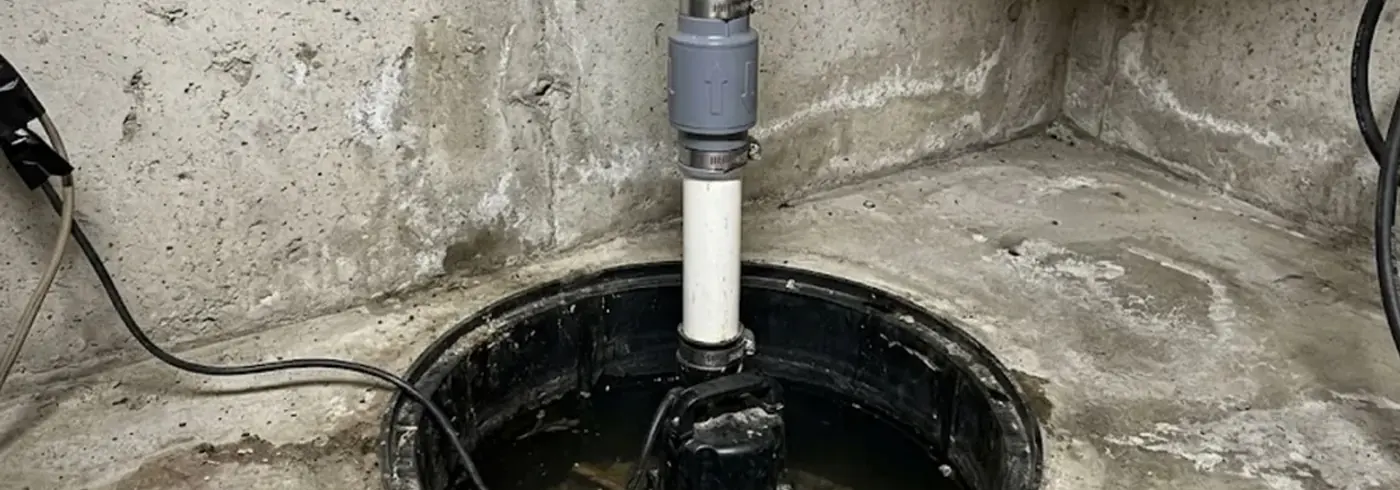
A sump system is a pit set into the basement floor, a pump inside it and a pipe that carries water outside. Drain tile or natural groundwater flow feeds the pit. When water in the pit reaches a set level, a float switch starts the pump and the water goes out through the discharge pipe.
The pump does not stop water from reaching the foundation. It gives the water a low place to go, so the floor stays dry.
Pedestal Pump or Submersible Pump
These are the two designs you will see. Each has a place.
Pedestal pump
- Motor sits above the pit on a column
- Easier to reach and service
- Louder and takes up more room
- Often shorter life under heavy use
Submersible pump
- Motor sits sealed inside the pit
- Quieter and cooled by the water
- Handles frequent cycling better
- Harder to pull for service
Most basement pits used for daily cycling are better served by a submersible, and the shallow narrow pit is the main reason to choose a pedestal.
Want a sump pump checked?
Call dispatch to test or replace the pump before the next storm.
The Parts Around the Pump Matter as Much as the Pump
A cheap pump with good supporting parts beats an expensive pump in a poor setup.
Check valve
A check valve on the discharge line keeps pumped water from running back into the pit. Without it, the pump restarts over and over.
Float switch
The float is the part that fails first. A tethered or vertical float must move freely and not catch on the pit wall or the cord.
Basin and lid
A pit needs enough depth for the pump to cycle and a sealed lid to keep out radon and humidity.
Discharge pipe
The pipe should be sized to the pump, sloped and routed so that water leaves the property without freezing in the line.
Where a Burbank Sump Discharge Is Allowed to Go
The South Stickney Sanitary District, which delivers water and maintains the sanitary sewers in Burbank, states in its FAQ that sump pumps must not be connected to the sanitary sewer. Clear groundwater in the sanitary system overloads it, which is a common reason mains surcharge and basements back up during storms.
The pipe belongs outside the house, discharged well clear of the foundation, and away from the neighbor's property. If the existing pump is tied into a floor drain or the house sewer, that connection should be changed.
Source: South Stickney Sanitary District customer FAQ, district office at 7801 Lavergne Avenue, Burbank.
Which Setup Fits Which Basement
Use this as a starting point and confirm the details with a plumber on site.
| Basement situation | Suggested setup | Why |
|---|---|---|
| Unfinished, rarely wet | Submersible primary pump | Reliable with minimal cost |
| Finished space with carpet or drywall | Primary plus battery backup | The cost of a failure is high |
| Floods during storms with power cuts | Primary plus battery or water-powered backup | Power often fails with the storm |
| Narrow or shallow pit | Pedestal pump or a replacement basin | Fits the space |
| Pump runs often year-round | Higher-capacity submersible and a check of drainage | Constant running signals a larger problem |
A site visit confirms what the pit and the water flow need.
Sizing a Pump Without Guessing
Pump sizing depends on how fast water reaches the pit and how high it must be lifted to leave the house. A one-third horsepower pump suits many homes, and a half horsepower pump suits larger flows or deeper lifts.
A larger pump is not always a better one. An oversized unit can empty the pit so quickly that it cycles on and off often, which wears the switch. A plumber can estimate flow by watching how fast the pit fills.
Signs Your Sump System Needs Attention Before Storm Season
A short check each spring avoids a bad surprise in summer.
- The pump runs constantly or does not run at all when the pit is full
- The float sticks or the pump rattles
- Water does not clear quickly after the pump starts
- The pump is old enough that you cannot recall when it was installed
- Corrosion or sediment fills the pit
If any of these apply, our sump pump repair and installation service can test and replace the system.
Battery Backup and What It Protects Against
A battery backup pump sits beside the primary pump and runs on a deep-cycle battery. It starts if power fails or the primary pump jams. Check the battery on a schedule and replace it when it no longer holds a charge.
Backup systems add protection, but they are not unlimited. A long outage in a heavy storm can drain a battery, so a larger battery or a water-powered backup suits basements that flood often.
Nearby Towns Face the Same Questions
Burbank is not the only place where basements take on water. Homeowners in Oak Lawn and Bridgeview ask the same questions, and the answers on pump type, discharge and backup are largely the same.
Village rules differ, so ask dispatch about the details for your address.
Where This Guide Gets Its Facts
The UL 778 pump standard, the Cook County hazard mitigation plan and the City of Burbank ordinance on sump discharge are the sources behind the advice here. Burbank does not allow a sump pump to discharge into the sanitary sewer.
Check the local rule for your address before you plan the discharge line.
Sump Pump Questions in Burbank
No. The South Stickney Sanitary District states that sump pumps must not be connected to the sanitary sewer. The discharge should go outside, well away from the foundation.
Test it at least once a year by pouring water into the pit until the float lifts. Check it again before the spring rain season.
Yes. A check valve stops pumped water from returning to the pit, which spares the pump unnecessary cycles.
The discharge may be frozen or blocked, the check valve may be stuck or the pump may be failing. A plumber can trace the cause.
No. A sump pump moves clean groundwater. An ejector pump lifts wastewater from a basement bathroom to the sewer line.
Questions about your sump system? Call dispatch.